The Future of Clinical Documentation: From Manual Typing to Ambient AI
Clinical documentation is evolving rapidly. Learn how ambient AI is replacing manual documentation workflows while keeping clinicians at the center of patient care
The Future of Clinical Documentation: From Manual Typing to Ambient AI
Introduction
Clinical documentation has undergone a remarkable transformation over the past few decades. Healthcare providers have moved from handwritten paper charts to electronic health records (EHRs), bringing significant improvements in accessibility and data management. However, digital documentation also introduced new challenges, including increased administrative work and documentation fatigue.
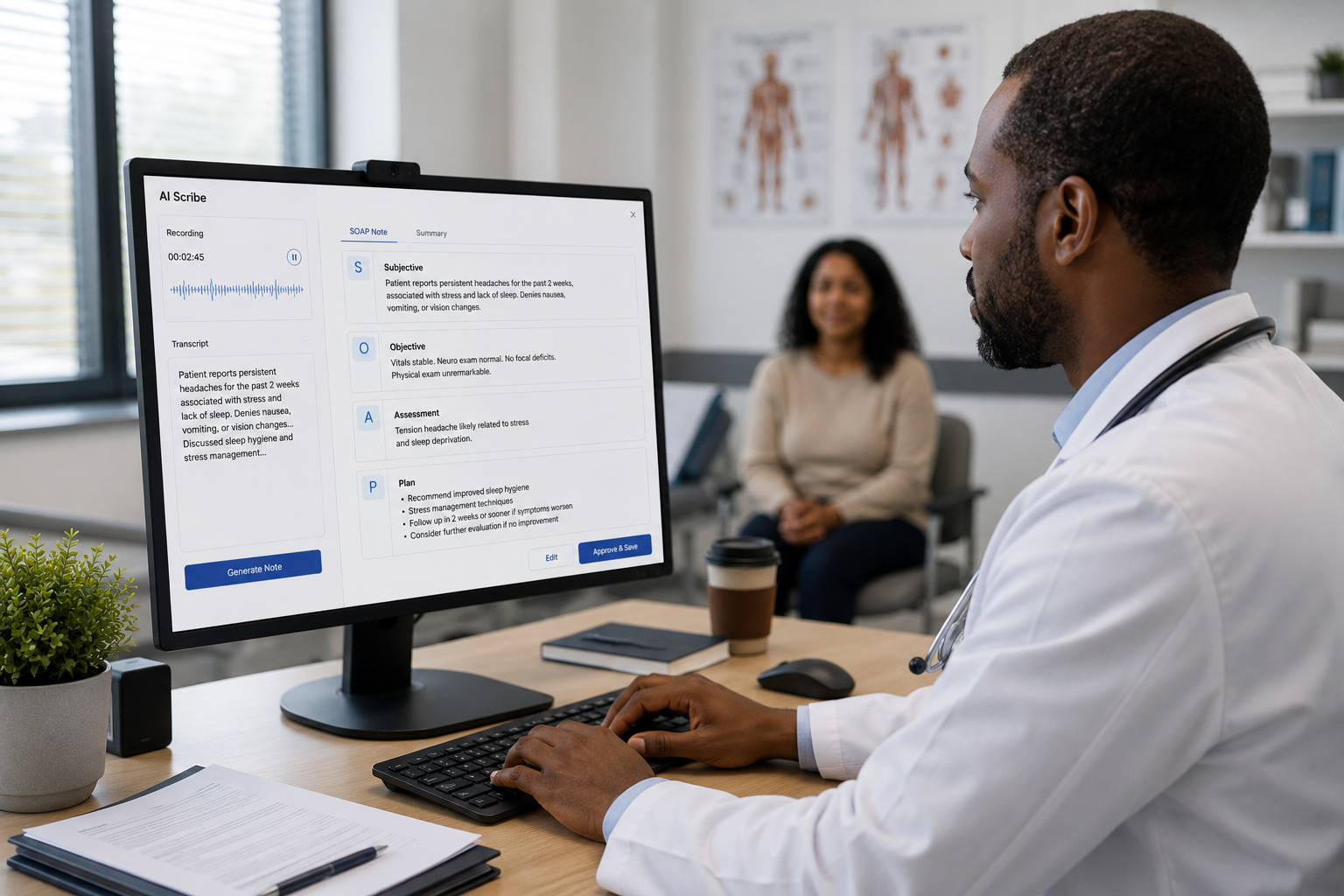
Today, ambient AI represents the next major evolution in clinical documentation. Rather than requiring clinicians to type during or after every consultation, ambient AI captures conversations and assists in generating structured clinical notes that clinicians review and approve.
The goal is not to replace clinicians—it is to reduce documentation burden while preserving the quality and integrity of the medical record.
The Evolution of Clinical Documentation
Clinical documentation has progressed through several distinct stages:
Paper Records
For decades, clinicians relied on handwritten notes. While familiar, paper records were difficult to organize, retrieve, and share across healthcare settings.
Electronic Health Records
EHRs digitized patient information and improved accessibility, but they also increased documentation requirements and contributed to clinician screen time.
Voice Dictation
Speech recognition software reduced typing but often required manual editing and formatting before notes could be finalized.
Ambient AI
Ambient AI introduces a more seamless workflow by listening during consultations and preparing structured documentation that clinicians review before signing.
Why Traditional Documentation Is Becoming Unsustainable
Healthcare systems continue to experience:
Increasing patient volumes More complex documentation requirements Expanding regulatory expectations Greater administrative workloads Rising clinician burnout
Many clinicians spend hours each day documenting patient encounters, often extending their work well beyond clinic hours.
What Is Ambient AI?
Ambient AI refers to technology that operates quietly in the background during a clinical encounter.
Rather than interrupting conversations, the system captures relevant information and organizes it into structured documentation.
Modern ambient AI systems can assist with:
Clinical transcription SOAP note generation Clinical summaries Documentation organization Workflow support
Importantly, clinicians remain responsible for reviewing, editing, and approving all documentation.
Benefits of Ambient AI More Patient-Focused Consultations
Reducing documentation demands allows clinicians to spend more time maintaining eye contact, listening actively, and engaging with patients.
Improved Workflow Efficiency
Automated draft generation shortens documentation time while preserving clinician oversight.
More Consistent Documentation
Standardized note structures improve consistency across patient encounters.
Reduced Administrative Burden
Clinicians can devote more attention to diagnosis and patient management rather than repetitive documentation tasks.
The Role of Human Oversight
Ambient AI should never replace professional clinical judgment.
Clinicians continue to:
Verify medical facts Correct inaccuracies Add clinical reasoning Modify assessments and treatment plans Approve final documentation
Human oversight remains essential for patient safety and documentation quality.
Challenges That Still Need to Be Solved
Despite rapid progress, ambient AI faces important challenges, including:
Accurate recognition of multilingual conversations Specialty-specific documentation requirements Complex clinical terminology Integration with diverse EHR systems Data privacy and security Maintaining clinician trust
Continuous improvement in these areas will determine the long-term success of ambient AI in healthcare.
What the Future Looks Like
Future ambient AI systems are expected to become:
More specialty-aware Better at understanding clinical context More multilingual Better integrated with hospital information systems More personalized to individual clinician workflows
Rather than replacing clinicians, these systems will increasingly function as intelligent documentation assistants that enhance productivity while preserving clinical autonomy.
Conclusion
Ambient AI is redefining how healthcare professionals document patient encounters.
By reducing administrative burden and supporting accurate, structured documentation, ambient AI enables clinicians to dedicate more attention to what matters most—patient care.
The future of clinical documentation is not about removing clinicians from the process. It is about equipping them with intelligent tools that improve efficiency while maintaining the highest standards of clinical quality, accuracy, and accountability.