How AI Medical Scribes Improve Clinical Documentation Accuracy Without Replacing Clinicians
Learn how AI medical scribes enhance documentation accuracy, reduce administrative burden, and help clinicians produce consistent, high-quality clinical notes.
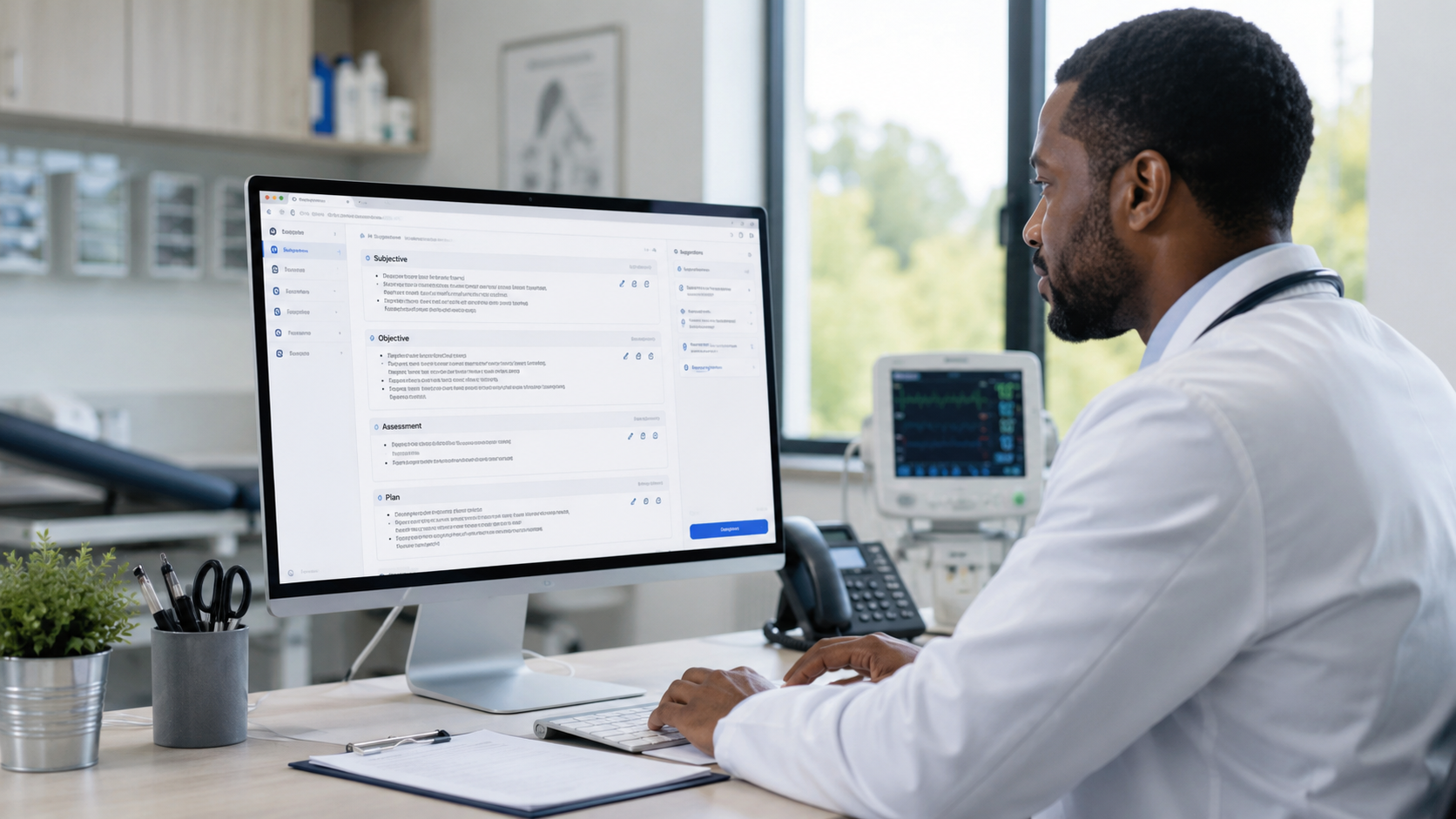
How AI Medical Scribes Improve Clinical Documentation Accuracy Without Replacing Clinicians
Introduction
Accurate clinical documentation is essential for quality healthcare. Every patient encounter generates information that influences diagnosis, treatment decisions, continuity of care, communication among healthcare professionals, reimbursement, and legal documentation.
However, clinicians often face significant documentation demands while managing busy clinical schedules. Time pressure can contribute to incomplete notes, inconsistent documentation, or delayed record completion.
AI medical scribes are designed to support—not replace—clinicians by assisting with documentation while leaving clinical judgment firmly in the hands of healthcare professionals.
Why Documentation Accuracy Matters
High-quality documentation helps healthcare organizations:
•Improve patient safety •Support continuity of care •Reduce documentation errors •Improve communication between providers •Facilitate quality improvement initiatives •Support appropriate reimbursement •Create complete medico-legal records
Small documentation inaccuracies can have significant downstream consequences throughout the patient's care journey.
Common Documentation Challenges
Clinicians frequently encounter:
•Time constraints •Documentation fatigue •High patient volumes •Multiple electronic health record systems •Administrative burden •Interrupted workflows •After-hours charting
These challenges contribute to clinician burnout and increase the risk of incomplete documentation.
How AI Medical Scribes Improve Accuracy
AI-assisted documentation can support clinicians by:
Capturing More Complete Conversations
Ambient AI listens throughout the consultation, helping ensure clinically relevant details are captured for review.
Creating Structured SOAP Notes
AI organizes documentation into familiar clinical formats, making notes easier to review and edit.
Improving Consistency
Standardized documentation reduces unnecessary variation while allowing clinicians to personalize final notes.
Supporting Better Recall
Rather than relying entirely on memory after a busy clinic session, clinicians can review AI-generated drafts based on the consultation.
The Clinician Remains in Control
One common misconception is that AI replaces clinical decision-making.
It does not.
Clinicians continue to:
•Verify documentation •Edit inaccuracies •Add clinical reasoning •Approve the final note •Sign documentation
AI assists with documentation—not diagnosis or treatment decisions.
The Importance of Specialty-Aware Documentation
Documentation differs significantly across specialties.
Examples include:
•Family Medicine •Internal Medicine •Emergency Medicine •Pediatrics •Psychiatry •Cardiology •Orthopedics •Dermatology
A specialty-aware AI system can better organize information using terminology and documentation patterns relevant to each discipline.
Human Review Is Essential
No AI-generated clinical note should become part of the medical record without clinician review.
Responsible AI implementation combines:
•AI efficiency •Human expertise •Clinical judgment •Quality assurance
This collaborative approach supports safer documentation.
Looking Ahead
As AI continues to evolve, future medical scribes are likely to become more context-aware, specialty-specific, and integrated into clinical workflows.
The most successful systems will prioritize clinician trust, transparency, privacy, and documentation quality rather than simply generating notes quickly.
Conclusion
AI medical scribes are helping reshape clinical documentation by reducing administrative burden while supporting greater consistency and accuracy.
Their greatest value lies in allowing clinicians to spend less time documenting and more time delivering patient care—without removing clinicians from the documentation process.
Technology should enhance clinical practice, not replace the expertise, judgment, and responsibility of healthcare professionals.