10 Ways AI Medical Scribes Are Transforming Modern Healthcare
Discover how AI medical scribes are transforming healthcare by reducing documentation time, improving clinician efficiency, and enhancing patient care.
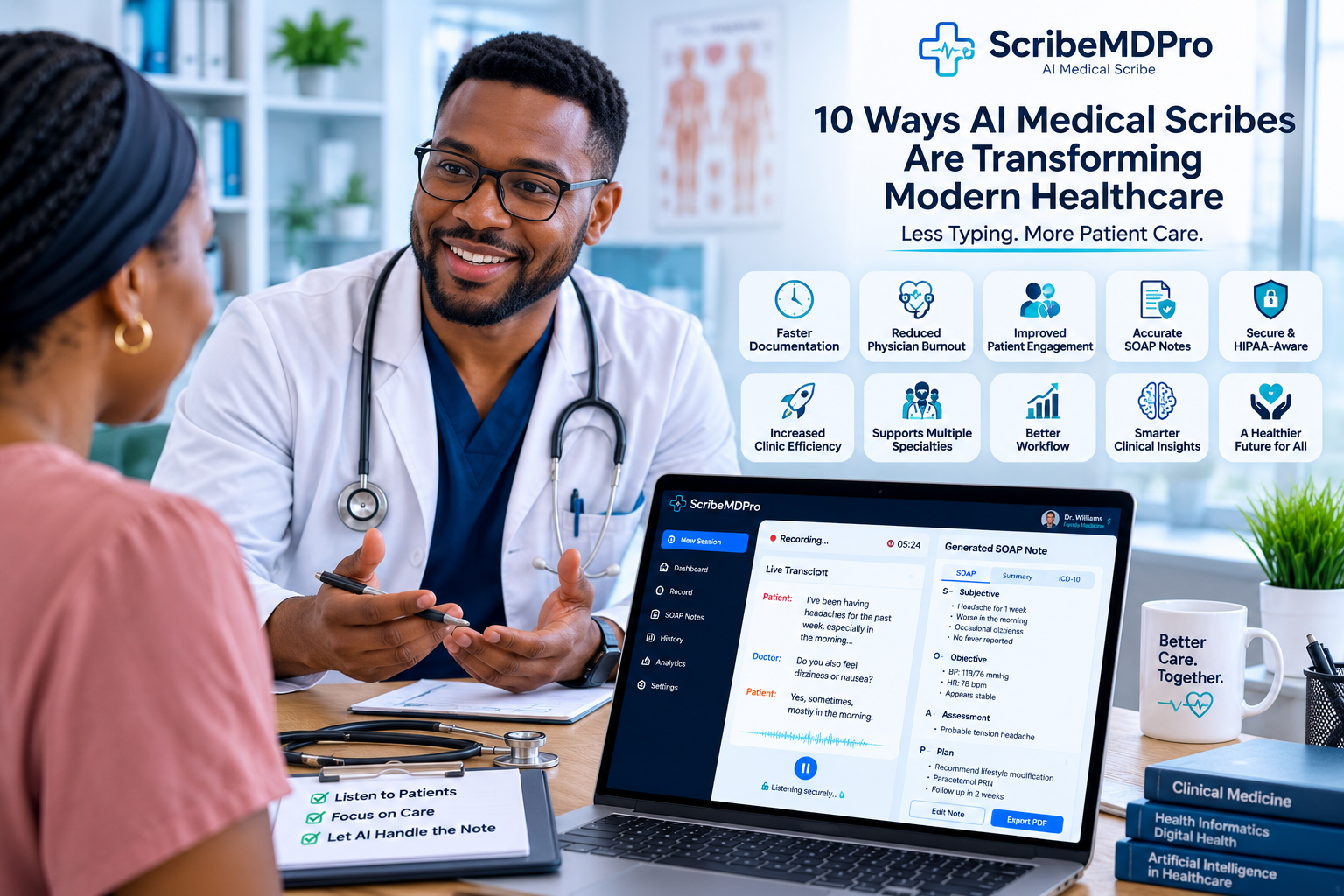
10 Ways AI Medical Scribes Are Transforming Modern Healthcare
Artificial intelligence is rapidly changing healthcare, and one of its most practical applications is the AI medical scribe. By automating clinical documentation, these tools help clinicians reduce administrative burden while improving workflow efficiency.
Here are ten ways AI medical scribes are transforming healthcare today.
- Reducing Documentation Time
Many clinicians spend hours each day documenting patient encounters. AI medical scribes automatically convert conversations into structured clinical notes, reducing time spent typing.
- Reducing Physician Burnout
Administrative work is a major contributor to clinician burnout. By automating documentation, physicians can focus more on patient care and less on paperwork.
- Improving Patient Engagement
Patients appreciate having their clinician's full attention instead of watching them type throughout the consultation. AI allows providers to maintain eye contact and communicate more naturally.
- Standardizing SOAP Notes
AI helps generate consistent, organized SOAP notes that follow accepted clinical documentation standards, making records easier to review and maintain.
- Increasing Clinic Efficiency
Faster documentation allows clinicians to complete notes sooner, reduce after-hours work, and improve overall workflow.
- Supporting Multiple Medical Specialties
Modern AI scribes can be adapted for specialties such as family medicine, cardiology, pediatrics, dermatology, psychiatry, emergency medicine, and more. Specialty-aware documentation improves relevance and accuracy.
- Enhancing Clinical Accuracy
AI can help identify missing documentation elements, improve note completeness, and reduce formatting inconsistencies. Clinicians should always review notes before signing.
- Simplifying Record Keeping
Digital documentation is easier to organize, search, retrieve, and share securely than handwritten notes or fragmented records.
- Supporting Healthcare Teams
Nurses, physician assistants, specialists, and other healthcare professionals can benefit from faster documentation workflows, improving team collaboration.
- Preparing Healthcare for the Future
As AI continues to evolve, documentation systems are expected to become more personalized, specialty-aware, and integrated with broader clinical workflows. Human oversight will remain essential, but AI will increasingly serve as a valuable assistant rather than a replacement.
Why ScribeMDPro Is Built for This Future
At ScribeMDPro, we believe AI should enhance—not replace—clinical expertise.
Our mission is to help healthcare professionals spend less time documenting and more time caring for patients through secure, intelligent, and clinician-centered AI documentation.
Conclusion
AI medical scribes are reshaping clinical documentation by reducing administrative burden, improving workflow efficiency, and supporting better patient interactions.
Healthcare professionals who adopt AI thoughtfully can reclaim valuable time while maintaining high standards of clinical documentation and patient care.